Most businesses do not buy a CRM because they want a CRM. They buy one because the current way of working has started to cost them deals. Quotes sit in someone's inbox, the forecast is a spreadsheet that nobody trusts and no single person can say what happened with a customer last month without asking three colleagues.
A Salesforce implementation is the project that replaces that. But the platform itself does not generate growth. Growth comes from a small number of specific things that change once people actually use it. This guide sets out what those changes are, what they are worth and where rollouts tend to come apart.
What a Salesforce implementation actually involves
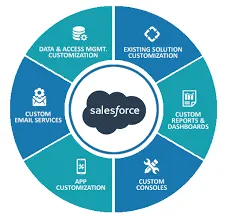
A Salesforce implementation is the work of getting the platform configured around your processes and genuinely adopted by the people who have to use it. It usually spans five strands:
- Discovery. Mapping how sales, service and marketing really operate today, including the workarounds nobody admits to in meetings.
- Configuration. Objects, fields, page layouts, validation rules and automation built to match those processes.
- Data migration. Moving accounts, contacts, opportunities and history out of the old system, then deduplicating and standardising them.
- Integration. Connecting Salesforce to ERP, billing, marketing tools or a data warehouse so it stops being an island.
- Adoption. Training, documentation, reporting and the follow-up that decides whether any of the above survives contact with reality.
The first four are engineering problems with predictable answers. The fifth is where most of the value sits and where most programmes underinvest. If you want a sense of what the whole exercise costs before committing, our Salesforce implementation cost guide breaks the budget down by scope.
Where the growth actually comes from
It helps to be concrete about the mechanism. A well-run implementation drives growth through four fairly specific changes.
One record of the customer
When sales, service and marketing all write to the same account and contact records, nobody has to reconstruct the relationship from memory. A rep opening an account sees the open support cases before they call. A service agent sees the renewal date before they set expectations. That context is what stops the avoidable churn that comes from one team not knowing what another team just did.
Manual steps disappear
Approvals, handoffs, follow-up reminders, quote generation and case routing all move from somebody remembering to do them to the platform doing them. This is the most immediately measurable gain. Teams commonly recover several hours per person per week and the recovered time goes into selling rather than administration.
Forecasting you can plan against
Once pipeline lives in one place with consistent stages and close dates, the forecast becomes something leadership can act on rather than argue about. That changes hiring decisions, inventory commitments and cash planning. The value here is not the report, it is the decisions the report makes possible.
Faster, more consistent service
Case management, routing rules and a knowledge base cut both resolution time and the variation between your best agent and your newest one. Consistency matters more than raw speed for retention.
What does good look like in numbers?
Treat published vendor averages with caution. They are drawn from customers willing to be referenced, which is a flattering sample. The ranges below reflect what we typically see on mid-market engagements where adoption is taken seriously.
| Area | Typical change | When it shows up |
|---|---|---|
| Admin time per rep | 4 to 6 hours per week recovered | Within one quarter |
| Lead response time | Hours down to minutes | Within one quarter |
| Forecast accuracy | Meaningful improvement once stages are enforced | Two quarters |
| Case resolution time | 20 to 35 per cent reduction | One to two quarters |
| Pipeline conversion | Gradual lift as process discipline holds | Two to four quarters |
Notice that the operational metrics move first and the revenue metrics follow. Anyone promising a conversion lift in the first month is selling rather than planning.
Why do so many rollouts stall?
The failure modes are consistent enough to be worth naming, because each has a cheap preventative and an expensive cure.
- Configuring the ideal process rather than the real one. If the build assumes a discipline the team does not have, reps route around it and the data goes stale within weeks.
- Migrating dirty data. Duplicates and inconsistent picklists carried across from the old system destroy trust in reports on day one. Once people stop believing the dashboard they stop maintaining the records behind it.
- Too many required fields. Every mandatory field is a tax on the person entering it. Ask only for what you will genuinely report on.
- Treating go-live as the finish line. Adoption is a curve, not an event. Budget for the eight weeks after launch, not just the weeks before.
- No owner afterwards. Without a named admin the org drifts, technical debt accumulates and nobody is responsible for the mess.
If a previous attempt already went this way, the situation is recoverable. Our guide on why Salesforce projects fail and how to rescue them covers the diagnostic path and an org health check is usually the sensible first step before spending anything further.
A sequence that tends to work
- Pick one measurable outcome. Shorten the sales cycle, or cut first response time. One, not five.
- Map the current process honestly, workarounds included.
- Clean the data before you move it. This is unglamorous and it is the highest-leverage week in the project.
- Configure the minimum that supports the outcome. Resist the urge to build everything the platform can do.
- Pilot with one team, then fix what the pilot exposes before widening.
- Train on the workflow, not the buttons. People adopt a way of working, not a user interface.
- Measure against the baseline you captured in step one, then decide what to build next.
Teams scaling beyond this point usually need more engineering capacity than they have. Whether that is a hire or a partner is a separate decision, covered in our guide to hiring Salesforce developers.
What comes after the first rollout?
The first go-live is the start of the useful work rather than the end of it. Once a team is genuinely using the platform, three questions tend to arrive in the same order.
Where is the data still stranded? Sales adopts Salesforce, then discovers that invoicing lives in the finance system and delivery status lives in an operations tool. Reps start tabbing between systems again, which is exactly the behaviour the project was meant to remove. This is the point to plan integration properly rather than patching it with exports. The choice between a platform such as MuleSoft and a lighter custom API layer is a real one with cost implications, which we cover in MuleSoft versus custom API integration.
What should we automate next? The best candidates are the steps people complain about, not the steps that look impressive in a demo. Watch where reps still copy and paste.
How do we keep changes from breaking things? Once several people are building in the same org, informal change management stops working. Sandboxes, version control and automated regression testing become worth the setup effort, which is the subject of our guide to Salesforce DevOps and test automation.
Organisations that treat these as a roadmap rather than surprises tend to keep compounding value from the platform. Those that treat go-live as completion usually find themselves commissioning a health check eighteen months later.
Getting the decision right
Salesforce is a capable platform that rewards clear thinking about process and punishes vagueness. The organisations that get growth out of it are not the ones that bought the most licences. They are the ones that picked a narrow outcome, cleaned their data, built only what the outcome required and kept investing in adoption after launch.
If you are planning a first rollout or repairing one that stalled, our Salesforce implementation services cover the full path from discovery through to adoption, or you can talk to our team about a scoped assessment of where you are today.